
Office and Workplace Safety Signs: The Often-Overlooked WHS Essentials
When people think of workplace safety signs, they picture construction sites, factories, and warehouses. Rarely does the modern office spring to mind. Yet Australian WHS legislation makes no distinction — if you operate a workplace, you have a legal obligation to identify hazards, manage risks, and display appropriate safety signage. Offices are no exception.
From fire warden signs and emergency exits to first aid locations and wet floor warnings, this guide covers the essential safety signage every Australian office needs to support compliance and protect the people who work there.
WHS Obligations Apply to Every Workplace
There is a common misconception that Work Health and Safety regulations are primarily concerned with high-risk industries like construction, mining, and manufacturing. While these sectors face elevated risks, the model WHS Act applies to all Persons Conducting a Business or Undertaking (PCBUs), regardless of industry. That includes accounting firms, legal practices, marketing agencies, and every other office-based business.
Under the WHS Act, a PCBU must ensure, so far as is reasonably practicable, the health and safety of workers and visitors. This includes providing and maintaining a safe work environment, which encompasses adequate safety signage. A workplace inspector visiting your office will expect the same categories of fundamental signage that any other workplace requires.
Non-compliance can result in improvement notices, prohibition notices, and financial penalties. More importantly, absent signage contributes to confusion during emergencies and increases the risk of everyday injuries.
Fire Safety Signs for Office Environments
Fire safety signage is the most critical category for office workplaces. Australian Standard AS 2444 sets out the requirements, and these apply fully to office buildings.
Every office must display fire signs identifying the location of fire extinguishers, fire hose reels, fire blankets, and manual call points. These signs must be clearly visible from normal walking paths — not hidden behind furniture, pot plants, or notice boards. A fire extinguisher tucked in a corner without a visible sign above it is effectively invisible during an emergency.
Fire warden identification signs are another essential element. In buildings with an emergency plan, fire wardens need to be identifiable, and their roles should be communicated through signage in common areas. Many offices benefit from floor warden boards showing evacuation procedures, warden names, and assembly point information.
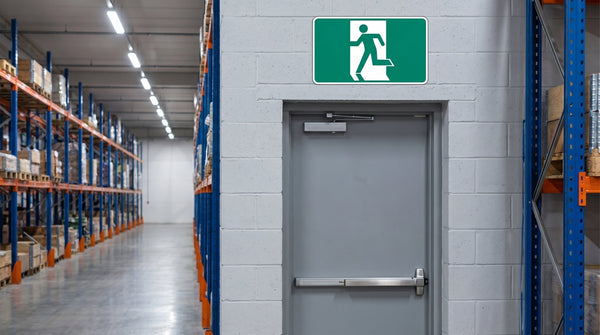
Emergency exit signs must be illuminated and positioned above every exit door and along evacuation routes. These signs must comply with AS 2293 for emergency lighting. If your office has undergone renovations or layout changes, verify that exit signage still accurately reflects the current evacuation routes.
Assembly point signs should be displayed at the designated muster point outside the building, helping ensure people gather in the correct area during an evacuation.
First Aid Signage in the Office
Every Australian workplace must have access to first aid equipment, and that equipment must be clearly identified with appropriate signage. First aid signs serve a vital purpose: in a medical emergency, every second counts, and clear signage removes the guesswork from locating supplies and trained first aiders.
At minimum, your office should display signs indicating the location of first aid kits, the names of trained first aid officers, and the location of any first aid room. First aid kit signs should be visible from multiple angles — particularly in larger offices where a single kit may serve an entire floor.
If your office has an automated external defibrillator (AED), it must be clearly signed. AED location signs are increasingly common in Australian offices. Sudden cardiac arrest can happen to anyone, and a defibrillator combined with clear signage can be the difference between life and death.
Everyday Hazard Signs Offices Often Miss
Beyond fire and first aid signage, there is a range of everyday hazard signs that many offices overlook. These address the routine risks that lead to slips, trips, falls, and other common workplace injuries.
Wet floor signs are a classic example. Office kitchens get mopped, entry foyers get wet during rain, and bathroom floors are cleaned regularly. Portable wet floor signs should be available and used whenever a surface presents a slip hazard.
No smoking signs are a legal requirement in enclosed workplaces across all Australian states and territories. Even if your office culture makes it seem unnecessary, the law requires the signage. This extends to building entrances and designated outdoor areas where smoking is prohibited.
Electrical hazard signs should be present on switchboard rooms, server rooms, and electrical distribution boards. Workers — particularly cleaning staff working after hours — need to be warned of the risks.
Notice signs play a broader role in office safety. Signs indicating maximum room occupancy, storage area rules, kitchen safety reminders, and visitor sign-in requirements all contribute to a safer environment. While they may seem minor individually, collectively they establish a culture of safety awareness.
Ergonomics and Wellbeing Signage
Modern office safety extends beyond traditional hazards to include ergonomic risks and worker wellbeing. While not always mandated by specific standards, many organisations incorporate ergonomic reminder signage into their workplaces.
Signs encouraging correct desk posture, regular movement breaks, and proper monitor positioning support your broader ergonomic risk management strategy. These are particularly valuable in hot-desking environments where workers may not have a permanently set-up workstation.
Mental health signage — such as Employee Assistance Program (EAP) contact details or encouragement to speak up about stress — is increasingly common. While the WHS Act does not prescribe specific mental health signage, the duty to manage psychosocial risks is established, and visible communication supports that obligation.
Conducting an Office Signage Audit
If you are unsure whether your office has adequate safety signage, a walkthrough audit is the best starting point. Walk through your office as if you were a first-time visitor or a workplace inspector.
Start at the building entrance. Can you see emergency exit signs? Is the assembly point clearly marked outside? Walk through reception and common areas — are fire equipment signs visible? Can you easily locate the nearest first aid kit? Move through the workspace floor by floor, checking for exit signs, fire extinguisher signs, and area-specific hazard warnings.
Pay attention to areas that have changed since the office was last set up. Renovated spaces, relocated kitchens, new server rooms, and additional meeting rooms all create signage gaps that are easy to overlook.
Inspect the physical condition of every sign. Faded, damaged, or partially hidden signs do not meet compliance requirements. Emergency exit signs must be illuminated and functioning. Document your findings and create an action plan for any gaps. Many businesses conduct this audit quarterly, aligning it with routine fire safety checks and general safety equipment inspections.
Key Takeaways
- WHS obligations apply to all workplaces — offices are not exempt from safety signage requirements
- Fire signs, emergency exit signs, and assembly point signs are non-negotiable for every office
- First aid signage must clearly identify kit locations, trained first aiders, and AED positions
- Everyday hazard signs — wet floor, no smoking, electrical warnings — are frequently overlooked in offices
- Ergonomic and wellbeing signage supports broader WHS risk management obligations
- Regular signage audits catch gaps created by office renovations, relocations, and layout changes
Get Your Office Safety Signage Sorted
From fire signs to first aid and emergency exits, browse our full range of office-ready safety signage that supports Australian WHS compliance.
Disclaimer: The information provided in this article is intended as general guidance only. Workplace health and safety regulations, including signage requirements, may vary between states and territories across Australia. Always consult your local regulatory authority and seek professional advice to ensure compliance with the specific requirements applicable to your workplace and jurisdiction.