
Car Park & Traffic Signs: AS1742 Guide | SafetySigns.com.au
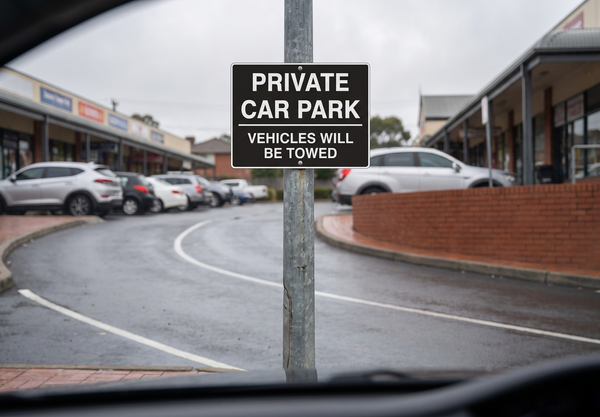
Every Australian workplace with vehicle traffic needs clear, compliant car park and traffic signs. From reserved bay markers to speed limits, give way signs and pedestrian priority indicators, these signs control vehicle movement, protect pedestrians, and reduce the risk of costly incidents in workplace car parks, internal roadways, and delivery areas.
Why Car Park and Traffic Signs Matter
Workplace car parks are high-risk environments. Vehicles, pedestrians, and delivery trucks share the same space, often under time pressure. Safe Work Australia data consistently shows vehicle incidents as a leading cause of workplace fatalities, and many of these occur in car parks, laneways and loading zones — not on public roads.
Under the national model Work Health and Safety Act, duty holders are required to manage risks associated with powered mobile plant and pedestrian interaction. Clear signage is one of the simplest, most cost-effective controls available.
Understanding the AS1742 Standard
AS1742 Manual of Uniform Traffic Control Devices is the Australian standard governing traffic signs on roads and in off-street areas such as car parks. While AS1742 primarily applies to public roads, most Australian workplaces adopt the same sign formats for internal roadways because drivers already recognise them.
Using AS1742-style signage in your car park means visitors, contractors and staff instantly understand what's required — no second-guessing, no hesitation.
Essential Signs Every Workplace Car Park Needs


Placement, Height and Materials
Even the best-designed sign is useless if drivers can't see it. Follow these practical placement rules:
- Mounting height: 2.0 to 2.4 metres to the bottom edge of the sign for outdoor installations — clear of most vehicle heights, visible above parked cars.
- Approach distance: Position regulatory signs (speed, give way, stop) so drivers have at least 3-5 seconds to read and respond at the posted speed.
- Material: Aluminium signs with Class 1 or Class 2 reflective vinyl withstand Australian sun, rain and dust. Reflective signs are critical for dawn, dusk and night shift operations.
- Posts and fixings: Galvanised posts or existing building fixings. Bollard-mounted signs protect high-risk pedestrian zones.
- Line marking: Signs work best combined with painted line marking — bay lines, pedestrian walkways, and hatching at hazard zones.
Car Park Signage Audit Checklist
- Speed limit sign at every entry point
- Give way or stop signs at internal intersections
- Pedestrian crossing or priority signage where people cross vehicle paths
- Accessible parking clearly marked with compliant symbols
- Directional arrows and one-way signage where traffic flow matters
- No parking, no stopping and loading zone signs where required
- Reflective vinyl on all outdoor signs
- Signs free from fading, damage, graffiti or obstruction
- Mounted at correct height, unobstructed by vegetation or vehicles
- Annual review of signage condition and placement
* This checklist is provided as a general guide only. Signage requirements may vary by state and territory. Always consult your local workplace health and safety regulations and seek professional advice for your specific circumstances.
Need Car Park and Traffic Signs for Your Workplace?
Browse our full range of AS1742-style car park, road and traffic signs — or contact our team for a custom quote.
Suggested Reading
- Warehouse & Forklift Safety Signs
- Warning Signs: Essential Hazard Communication
- Loading Dock & Delivery Area Safety Signs
- Prohibition Signs in the Workplace
Disclaimer: The information and checklists provided in this article are intended as general guidance only. Workplace health and safety regulations, including signage requirements, may vary between states and territories across Australia. Always consult your local regulatory authority and seek professional advice to ensure compliance with the specific requirements applicable to your workplace and jurisdiction.