
In Use / Vacant & Amenity Door Signs for Workplaces
A poorly labelled door creates confusion, interruptions and awkward moments. Whether it's a meeting room mid-presentation, a consultation room with a client, or an accessible toilet being used, clear door and room-status signage helps everyone navigate your workplace with confidence. Well-chosen door signs also support people with disability by using universally recognised pictograms — an important consideration in any inclusive workplace or public-facing building. This guide covers the most useful door sign types for Australian offices, clinics, gyms and workplaces, anchored around our best-selling In Use / Vacant slider door signs.
What are door and amenity signs?
Door and amenity signs are the everyday wayfinding and identification labels fitted to internal doors, washrooms, meeting rooms and back-of-house facilities. They cover everything from In Use / Vacant slider signs on bathroom and meeting-room doors to accessible toilet signs (AS 1428 compliant), staff-only restrictions, store-room identification and room-number wayfinding.
Unlike WHS hazard signage, door and amenity signs are about clarity and usability — making sure visitors and staff can find the right room, know whether it's available, and meet accessibility obligations. This guide walks through the main categories, the relevant Australian Standards, and the materials and mounting choices that suit different door types.
In Use / Vacant Slider Door Signs
The In Use / Vacant occupancy slider sign is one of the most practical door signs available. A simple sliding panel reveals either “In Use” or “Vacant” — no electronics, no batteries, no app required. The occupant slides the indicator before entering and back again on leaving. It takes less than a second and instantly communicates room status to anyone approaching.
Slider door signs are well suited to:
- Meeting and boardrooms — eliminates knock-and-interrupt interruptions during calls and presentations.
- Medical and allied health consultation rooms — supports patient privacy and keeps waiting rooms orderly.
- Parents' and breastfeeding rooms — provides privacy without the need for a lock.
- Accessible and ambulant toilet cubicles — especially important in public facilities where visual cues reduce queuing confusion.
- First-aid and sick rooms — helps staff know at a glance whether the room is occupied.
- Interview and quiet focus rooms — open-plan offices with shared rooms benefit from a clear occupancy signal.
Look for signs manufactured from durable materials with a positive-click slider mechanism. A sign that slides too loosely can drift to the wrong position. Browse the range at building and door signs or explore our custom-made signs if you need a specific room name or logo added.
Washroom & Amenity Signs
Beyond room-status sliders, workplaces need clear, durable identification signs on toilet and amenity doors. Good amenity signage uses internationally recognised pictograms so the message is clear regardless of language or literacy level — an important inclusion principle for diverse workplaces and customer-facing venues.
Common amenity door signs include:
- Male / Female toilet signs — standard pictogram identification for separate facilities.
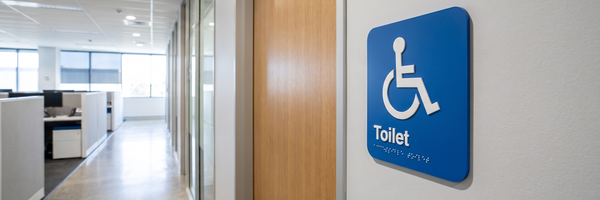
- Accessible toilet signs — featuring the International Symbol of Access (ISA). AS 1428 covers design requirements for access and mobility signage in Australian buildings; always confirm your local building code requirements with a qualified practitioner.
- Ambulant accessible toilet signs — for facilities designed for people with ambulant disability.
- Unisex / All-gender toilet signs — increasingly common in modern offices and public buildings.
- Shower room signs — for gyms, sports facilities and end-of-trip facilities in commercial buildings.
- Kitchen and lunchroom signs — keeps staff amenity spaces identifiable in multi-tenancy buildings.
Where accessible facilities are present, combined signage (e.g. accessible toilet + baby change) can keep door clutter to a minimum while still conveying all relevant information. See also our guides to mandatory signs and notice signs for related signage categories.

Wayfinding & Door Identification
Amenity and occupancy signs are only part of the picture. A well-signed workplace also uses door identification signs to help visitors, contractors and new staff navigate independently. Common options include:
- Room name and number signs — office numbers, suite identifiers and named rooms (Reception, Board Room, Server Room).
- Staff Only signs — clearly restrict back-of-house areas from customers or visitors.
- Storeroom and plant room signs — identifies utility spaces to reduce unauthorised access and support emergency response.
- Directional door signs — arrows and room names that guide visitors from reception to meeting rooms or amenities without assistance.
For broader workplace safety signage, see our guide to office and workplace safety signs and browse the full Australian standard safety signs range.
Materials, Mounting & Placement
Door signs need to withstand frequent touching, cleaning products and, in commercial kitchens or gym changing areas, humidity. Key considerations when selecting and installing door signs:
- Material: UV-stabilised rigid plastic or aluminium composite panel withstands daily contact and regular cleaning. Avoid paper-laminate signs on high-touch doors.
- Mounting method: Self-adhesive foam tape suits smooth, painted plasterboard doors. Screw-fix is preferred for fire doors, timber veneers and high-traffic surfaces where adhesive may lift.
- Height: Mount door identification signs at approximately 1,500 mm from finished floor level — consistent with accessible signage guidelines and comfortable for most adults to read without stooping or reaching.
- Placement: Position the sign on the latch side of the door rather than the hinge side, so it remains visible when the door is open.
- Colour contrast: High contrast between sign background and text or pictogram improves legibility for people with low vision.
If your venue has unusual door widths, heritage finishes or non-standard room names, our custom-made signs service can produce matching branded door signs in any size or finish. Also see our guide to first-aid signs for room identification in health and safety contexts.
Door & Amenity Signage Checklist
- In Use / Vacant slider signs fitted to all shared meeting and consultation rooms
- Parents', breastfeeding and first-aid rooms have occupancy signs
- All toilet and washroom doors clearly identified with pictogram signs
- Accessible toilet door carries the International Symbol of Access
- Ambulant accessible toilet signed separately where applicable
- Kitchen, lunchroom and shower facilities identified by name
- Staff Only and restricted-area doors clearly labelled
- Room name / number signs installed at consistent heights throughout
- Signs mounted on latch side, at approximately 1,500 mm above floor level
- Signs in high-humidity or high-touch areas use screw-fix or heavy-duty adhesive
- Annual review scheduled to replace faded, damaged or repositioned signs
* This checklist is provided as a general guide only. Signage requirements for accessible facilities, fire doors and regulated spaces may vary by building class, state and territory. Always consult your local regulatory authority and seek professional advice for your specific circumstances.
Kit Out Your Doors & Amenities
Browse In Use / Vacant sliders, washroom signs and workplace door signs — or order custom signs to match your brand or building.
Shop Workplace Signs Order Custom SignsDisclaimer: The information provided in this article is intended as general guidance only. Workplace health and safety regulations, including signage requirements for accessible facilities, fire doors and regulated spaces, may vary between states and territories across Australia. Always consult your local regulatory authority and seek professional advice to ensure compliance with the specific requirements applicable to your workplace and jurisdiction.