
Warning Signs: Essential Hazard Communication for Australian Workplaces
Every workplace has hazards. The difference between a safe workplace and an accident waiting to happen often comes down to one thing: proper warning signs. These distinctive yellow triangle signs serve as the first line of defence, alerting workers and visitors to potential dangers before they become incidents.
Danger signs vs warning signs — what's the difference under AS1319?
Australians often use the terms "danger signs" and "warning signs" interchangeably, but under AS1319 they are two distinct categories that look different and signal different levels of risk.
Warning signs are the yellow triangle with a black border and pictogram. They alert workers to a hazard that could cause injury if ignored — slippery floor, hot surface, low overhead, electrical risk. The hazard is present but not immediately life-threatening.
Danger signs are different. They have a red oval header reading DANGER on a white background, with black text below describing the hazard. Danger signs are reserved for situations where there is an immediate threat to life — live high-voltage equipment, confined spaces, dangerous chemical exposure, fall hazards over 2 metres.
This article focuses on warning signs (the yellow triangle category). For situations requiring DANGER signage, see our danger signs collection.
What Are Warning Signs?
Warning signs are safety signs that alert people to potential hazards in an area. Under Australian Standard AS1319, warning signs feature a distinctive yellow triangle with a black border and black symbol or text. This consistent design ensures instant recognition across all Australian workplaces.
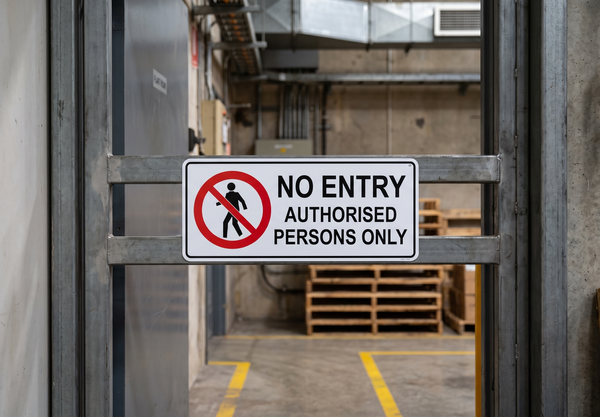
Unlike prohibition signs (red circles with a line through them) that tell you what NOT to do, or mandatory signs (blue circles) that tell you what you MUST do, warning signs simply alert you to a hazard that exists. They say "be aware"—the appropriate caution is then expected from the person entering the area.
Common warning sign examples include:
- Beware of Vehicles
- Beware of Moving Parts
- Beware of Falling Objects
- Exclusion Zone warnings
- Hazard identification (electrical, chemical, biological)
Why Your Business Needs Warning Signs
Legal Compliance and Due Diligence
Under Australian workplace health and safety legislation, businesses have a duty of care to protect workers and visitors from foreseeable hazards. Proper warning signage is a fundamental part of meeting this obligation.
If an incident occurs and your workplace lacked appropriate warning signs, you may face serious questions about due diligence. Did you identify the hazard? Did you take reasonable steps to warn people? These are exactly the questions regulators and insurers will ask.

Insurance and Liability Protection
Your insurance coverage depends on demonstrating that you've taken reasonable precautions to prevent workplace incidents. Warning signs are tangible evidence that you identified hazards and communicated them appropriately.
When an incident occurs, one of the first things insurers investigate is signage. Were there adequate warnings in place? Were they clearly visible and properly maintained? Missing or inadequate warning signs can complicate claims and potentially affect coverage.
Protecting Workers and Visitors
The primary purpose of warning signs is simple: prevent injuries. A worker who knows there's a forklift operating around the corner walks more cautiously. A visitor who sees a "Beware of Falling Branches" sign stays alert in an outdoor area.
Warning signs work because they provide critical information at exactly the moment it's needed—before someone enters a hazardous area.
Common hazard signs for Australian workplaces
"Hazard signs" is the everyday term for the full family of AS1319 visual warnings — yellow warning triangles, red prohibition circles, and red-oval DANGER signs combined. Whenever someone asks for "hazard signs" or "hazard signage", they typically mean any sign that communicates a risk in the workplace.
The most common hazard signs across Australian workplaces are:
- Slip and trip — wet floor, uneven surface, step warning
- Electrical — high voltage, electric shock, switchboard
- Chemical — corrosive, flammable, toxic substance
- Mechanical — moving parts, crush hazard, automatic machinery
- Falling objects — overhead loads, falling debris
- Hot surface — burn risk from process equipment or pipes
A proper risk assessment will identify which hazard signs your site needs. The detailed sections below walk through how these hazards typically present in different Australian workplace contexts.
Common Workplace Hazards That Require Warning Signs
Vehicle and Traffic Hazards
Warehouses, construction sites, and industrial facilities with forklift traffic, trucks, or moving equipment need clear vehicle warning signs. Signs like "All Vehicles Must Use Hazard Lights On This Site" and "Beware of Vehicles" protect pedestrians working near mobile equipment.
Equipment and Machinery
Manufacturing facilities and workshops must warn of hazards from moving parts, rotating equipment, and automated machinery. "Beware of Moving Parts" signs alert workers to keep clear of dangerous equipment zones.


Environmental Hazards
Australian workplaces face unique environmental hazards including snakes, falling branches, and extreme weather conditions. Rural and outdoor workplaces particularly need warning signs for these natural hazards.
Exclusion Zones
Many workplaces require exclusion zones around hazardous operations. Signs like "3 Metre Exclusion Zone" clearly mark safe distances from cranes, forklifts, and heavy equipment.

Health and Hygiene Hazards
Bio-hazard signs, respiratory protection warnings, and lifting injury prevention signs protect workers from health risks that may not be immediately visible.
The Cost of Inadequate Warning Signs
Direct Costs
- Workers compensation claims
- Medical expenses
- Equipment damage
- Production delays
- Regulatory fines
Indirect Costs
- Increased insurance premiums
- Reputation damage
- Staff morale and retention issues
- Legal fees and investigation costs
- Lost business opportunities
The cost of a single workplace incident often exceeds thousands of dollars. Compare that to the cost of proper warning signage—typically under $50 per sign—and the investment case becomes clear.
Choosing the Right Warning Signs
Size and Visibility
Warning signs must be visible from the distance at which people need to receive the message. Outdoor signs and those in large facilities typically need larger formats (450x600mm). Indoor signs in smaller areas can use standard 225x300mm sizes.
Material Selection
- Metal: Best for permanent outdoor installations. Withstands Australian weather conditions and provides long-term durability.
- Polypropylene: Cost-effective for indoor use and temporary applications.
- Corflute: Lightweight option for temporary hazard warnings.
- Self-Stick Vinyl: Ideal for equipment and machinery labelling.
Strategic Placement
Position warning signs at decision points—where people have the opportunity to take a different route or adjust their behaviour before encountering the hazard. Signs placed too close to hazards don't give people time to react.
Maintaining Your Warning Sign System
Warning signs only work if they remain visible and legible. Regular maintenance should include:
- Monthly visual inspections for damage, fading, or obstruction
- Immediate replacement of damaged or illegible signs
- Review of signage adequacy when workplace conditions change
- Updates when new hazards are introduced or removed
- Staff training on hazard awareness and sign meanings
Taking Action
Effective warning signage isn't about ticking a compliance box—it's about genuinely protecting the people in your workplace. A systematic approach to hazard identification and appropriate signage demonstrates that your business takes safety seriously.
Walk through your workplace with fresh eyes. Where are the hazards? Where might a visitor who doesn't know your operations encounter unexpected dangers? Those are the places that need clear, professional warning signs.
Ready to Improve Hazard Communication at Your Workplace?
Browse our comprehensive range of warning signs or contact our team for expert advice on workplace safety signage.
Disclaimer: The information provided in this article is intended as general guidance only. Workplace health and safety regulations, including signage requirements, may vary between states and territories across Australia. Always consult your local regulatory authority and seek professional advice to ensure compliance with the specific requirements applicable to your workplace and jurisdiction.